
 Wayne Bodie Books
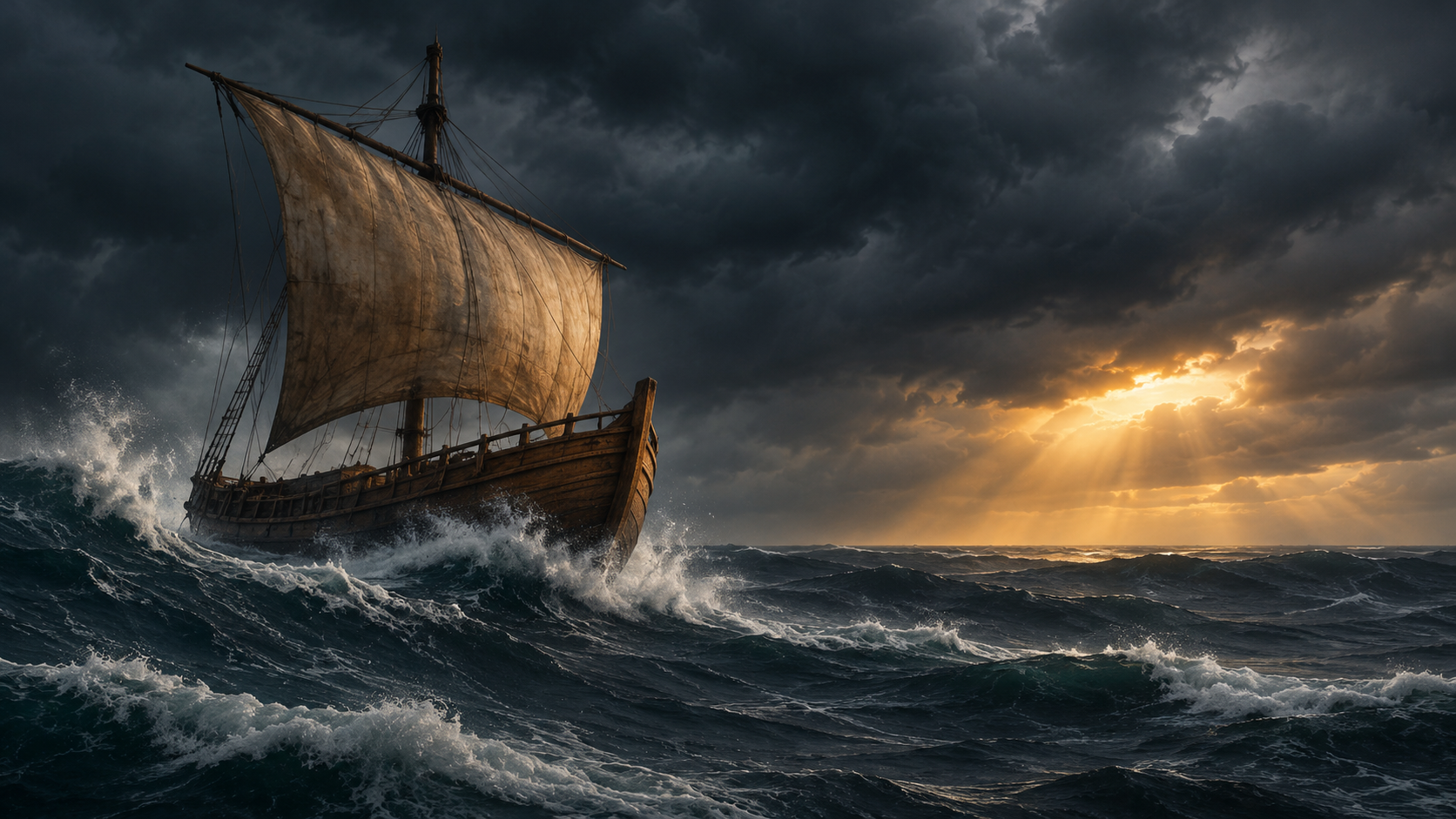
There are mornings when you wake up thinking about everything you still need to accomplish. The projects waiting for attention, the bills that need paying, the opportunities that haven't materialized, and the countless things you've worked so hard to build. You make another plan, try another approach, and convince yourself that perhaps this next effort will finally make the difference.
I know that feeling well.
I spend a considerable amount of time creating things. Books, music, websites, articles, and ideas that sometimes seem to multiply faster than I can finish them. I work, I plan, I experiment, and when something doesn't produce the results I hoped for, my natural inclination is to figure out what else I can do.
But I woke up this morning with a thought that challenged that entire way of thinking.
What if none of it was ever really dependent upon my own strength?
The Illusion of Control
In John 15:5, Yehoshua tells His disciples that He is the vine and they are the branches. He concludes with a statement that is remarkably simple and yet difficult for us to accept: "Without me ye can do nothing."
Not some things. Nothing.
Of course, people accomplish things every day. We build businesses, develop technologies, raise families, and make decisions that have real consequences. But Yehoshua was teaching something deeper than our ability to perform ordinary tasks. He was speaking about our dependence upon Him for spiritual life and lasting fruit.
We may possess the ability to work, but we do not possess independent control over the outcome.
That distinction can be frightening. We like believing that careful planning, sufficient effort, and a little determination will eventually place us in control of our circumstances. When things begin moving in an unexpected direction, we instinctively reach for the steering wheel.
Proverbs 14:12 offers a sobering warning: "There is a way which seemeth right unto a man, but the end thereof are the ways of death."
Something can appear perfectly reasonable to us and still lead somewhere we never intended to go.
And sometimes, the more desperately we try to save a situation, the less willing we become to trust Yah with it.
A Storm, a Promise, and a Sinking Ship
One of the most remarkable illustrations of this principle appears in Acts 27.
The apostle Paul was being transported by ship toward Rome when the vessel encountered a violent storm. For days, the crew struggled against the weather. Cargo and equipment were thrown overboard, the ship was driven across the sea, and eventually the men lost hope of surviving.
Then Paul stood before them with an extraordinary message.
An angel of Yah had assured him that he would stand before Caesar and that the lives of those sailing with him would be preserved. Paul encouraged everyone aboard to take heart and trust what he had been told.
But there was a detail in that promise that deserves attention.
The people would survive. The ship would not.
Later, as the sailors sensed they were approaching land, some attempted to escape in the ship's small boat. Their reasoning was understandable. They were experienced sailors, facing a dangerous situation, and apparently believed they had discovered a way to save themselves.
Paul warned the centurion and soldiers that unless those men remained aboard, the others could not be saved (Acts 27:31).
The soldiers cut away the small boat.
Imagine that moment. The men had been fighting for their lives, and now their apparent means of escape was drifting away.
They had to remain aboard a vessel that was already destined to be lost.
The Boat Was Never the Promise
Eventually the ship ran aground and began breaking apart. Some passengers swam toward shore, while others made their way on boards and pieces of the wreckage.
Acts 27:44 records that everyone reached land safely.
All 276 people survived.
The ship was destroyed. Much of what they had depended upon was gone. Their journey certainly hadn't unfolded according to plan.
But Yah's promise had not failed.
And this is the part of the story that has stayed with me.
We can become so attached to the things we're building that we begin confusing the vessel with the purpose of the journey.
A business, a career, a ministry, a financial plan, or even a carefully imagined future can become our boat. We maintain it, protect it, and desperately attempt to keep it from running aground.
There's nothing inherently wrong with doing that work. Paul himself took practical steps throughout the voyage. He offered warnings, encouraged the passengers, urged them to eat, and participated in the circumstances through which their lives were preserved.
Faith did not eliminate responsibility.
But responsibility was never the same thing as control.
The story of Acts 27 does not promise that every believer will be spared from tragedy or financial loss. It records a specific promise given to Paul and its fulfillment. Yet it also offers a powerful illustration of what trusting Yah can look like when circumstances seem to contradict everything we expected.
Sometimes the thing we are trying hardest to preserve may not be the thing Yah is accomplishing through us.
When We Grab the Wheel
I wonder how many times we complicate our own lives because we cannot tolerate uncertainty.
We pray for guidance, but become impatient when the answer doesn't arrive according to our schedule. We ask Yah to direct our steps, then grow uncomfortable when those steps lead somewhere unfamiliar.
So we intervene. We devise another plan, pursue another opportunity, or attempt to force something into existence because standing still feels too much like failure.
And sometimes those decisions produce painful consequences. Other times, the consequences themselves become opportunities for correction, humility, and growth.
That doesn't mean every hardship is punishment or that every disappointment was deliberately arranged to teach us a lesson. We should be careful about claiming to know Yah's specific intentions in circumstances we do not fully understand.
But Scripture repeatedly reminds us that human understanding is limited and that trust requires something more than confidence in our own judgment.
Proverbs 3:5–6 calls us to trust Yehovah with our whole heart rather than leaning upon our own understanding. It does not tell us to abandon wisdom or stop making decisions. It tells us where our confidence ultimately belongs.
We can do the work faithfully without pretending we control tomorrow.
Stay in the Boat
Perhaps surrender is not what we often imagine.
It isn't necessarily walking away from our responsibilities, abandoning our ambitions, or sitting quietly while life passes us by.
Perhaps it is continuing to do what we have been given to do while releasing our demand to determine how everything must turn out.
We plant, but we cannot command the harvest. We build, but we cannot guarantee that every structure will stand. We make our plans, but we do not see the entire journey.
And when the storm arrives, our first instinct may be to seize the wheel or look for the nearest lifeboat.
But sometimes faith asks us to remain where Yah has called us, even when staying makes less sense than running.
I don't know what will become of everything I'm building. I hope it grows. I hope it reaches people. I hope the work becomes useful in ways I cannot presently imagine.
But I am beginning to appreciate something more important than any of those outcomes.
My responsibility is faithfulness. The outcome belongs to Yah.
And if the boat should eventually break apart, that does not necessarily mean the journey was wasted or that He has abandoned me.
After all, on that storm-tossed voyage toward Rome, the passengers reached shore with nothing more than their lives and pieces of a broken ship.
Yet every soul arrived.
Sometimes we become so concerned about saving the boat that we forget Who holds the destination.
Stay in the boat. Trust the Captain. And let Yah decide what reaches the shore.